
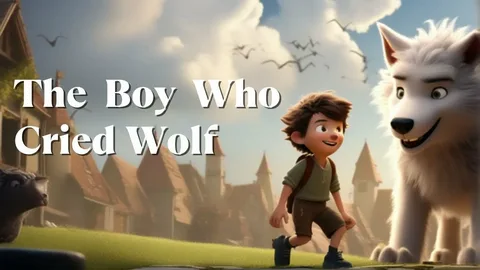
What would you do if your voice lost all credibility because of a single lie? THE BOY WHO CRIED WOLF captures this dilemma in a captivating way! This classic fable isn’t just a childhood tale; it’s a critical reminder of how our actions can shape perceptions and relationships. In this article, we’ll dive into why this story remains relevant today and what important insights we can glean to navigate our increasingly complex world. Get ready to explore the implications of lying and awaken your inner storyteller!
🐺 The Boy Who Cried Wolf: An Exciting Dive into Integrity, Trust, and Consequences!
Get ready to explore one of the most iconic tales in Western literature: “The Boy Who Cried Wolf“! This isn’t just a simple story; it’s a captivating journey into the depths of integrity and the fragility of trust. Attributed to the legendary Aesop, this fable serves as a powerful reminder of the dangers of deceit, illuminating how constant lying can lead to isolation, especially when we truly need help and these are so helpful for children bedtime stories.
🏞️ Setting the Scene: The Shepherd’s Mistake!
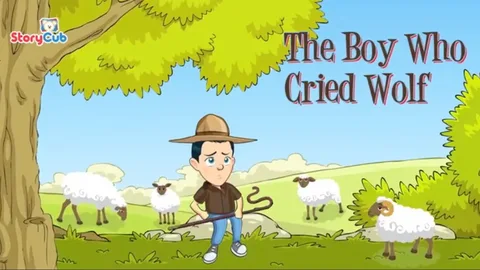
Picture a beautiful pastoral landscape where a bored young shepherd boy grapples with the weight of his very important duty: protecting the community’s precious sheep from the lurking threat of a wolf. But, oh no! Instead of taking his job seriously, our mischievous hero decides to spice up his dull day with some trickery! His entertainment? A callous prank aimed at fueling the village’s deep-rooted fear of wolves. He shouts, “Wolf! Wolf!”
The Villagers’ Genuine Response: A Heartwarming Moment!
What happens next is nothing short of thrilling! The villagers leap into action without hesitation! Their deep sense of community pulls them away from their farming, weaving, or building to rush towards the pasture, armed and ready. This instant reaction speaks volumes about the trust they placed in the boy, showcasing the vibrant spirit of cooperation that once thrived among them.

The Shepherd’s Betrayal: A Game-Changer!
As the villagers sprint to help, what does our young trickster do? He bursts into laughter! This isn’t just a harmless prank — but a significant betrayal of trust! He disrespects their time, their worries, and the very real danger they believed he was warning them about.
In this electrifying tale, we learn that trust is a treasure that can be easily lost. Let’s embrace integrity and always remember: one prank can lead to serious consequences! 🐑✨
The Disintegration of Trust
The tale brings to light a crucial psychological insight: repetition breeds disbelief.
- The Second Incident:
When the boy repeated his mischievous prank, what began as shock swiftly morphed into irritation and profound skepticism. The villagers, caught off guard once more, reacted with a sluggish, tentative approach, filled with frustration. It dawned on them that they were being duped. They issued firm warnings, trying to steer the boy back toward a sense of morality by stressing the grave consequences of his false alarms. Yet, blinded by the thrill of his control over their emotions, the boy shrugged off their wisdom. He prioritized fleeting fun over the long-lasting impact on his reputation.
- The Build-Up:
With each fabrication, the boy eroded the value of his words. His once urgent cries for help began to fade into the villagers’ minds as mere noise — an expected signal of trickery.
- 🩸 The Unavoidable Fallout
The nail-biting climax arrives when the real wolf charges toward the flock. This marks a thrilling shift from comedy to catastrophe!
- The True Alarm:
Paralyzed by authentic dread, the shepherd boy cries out the same heartfelt words: “Wolf! Wolf! Help!” Finally, his frantic plea is completely honest, a matter of survival for the sheep — and perhaps for himself, too!
- The Community’s Devastating Response:
After being emotionally manipulated twice, the villagers found themselves drained and skeptical. Their judgment was clouded by previous experiences. They reasoned, “He’s deceived us once more; let him face the consequences.” They remained in their village, their inaction a direct, albeit unintentional, consequence of his earlier schemes.
Once upon a time, in a quaint little village, there lived a young shepherd. He was responsible for watching over a flock of sheep. However, this boy was mischievous and bored. To spice things up, he decided to shout, “Wolf! Wolf!” even when there was no wolf in sight.
The villagers, alarmed by his cries, rushed to his aid, only to find him laughing at their expense. Can you imagine their frustration? But the boy didn’t stop! He found the thrill irresistible.
Then, one fateful day, a real wolf appeared! The boy shouted louder than ever, “Help! There’s a wolf!” But this time, the villagers didn’t believe him. They thought it was another prank!
The wolf snatched away some sheep, leaving the boy heartbroken. This story reminds us that honesty is essential. If we cry wolf too many times, no one will believe us when it really matters!
The fable of The Boy Who Cried Wolf powerfully illustrates the incalculable cost of lies. Deception isn’t just a harmless act; it comes with a hefty price tag for both the liar and the misled.
Each lie robs people of their emotional energy and precious time. Over time, the deceiver’s credibility diminishes, leading to distrust.
In the realm of public life, this cost amplifies dramatically. A political leader who continually exaggerates threats or invents crises runs a grave risk. When a real emergency arises like a pandemic or an economic disaster the public, suffering from “alarm fatigue,” becomes apathetic.
Their response diminishes, leaving them unprepared to take crucial action. In this way, the leader’s past dishonesty creates a dangerous barrier, jeopardizing lives and property. Ultimately, this repeated cycle leads to a state of self-isolation through deception, where the liar’s world becomes increasingly lonely and disconnected.
The repeated liar creates a prison of solitude for themselves! With every twist and turn of the truth, their authentic voice fades into the background.
Imagine being surrounded by friends yet feeling utterly alone. The constant exaggerator, the master of tall tales, suddenly faces a grim reality. When they attempt to share a genuine concern, who will listen?
Their friends, trained to dismiss their claims, struggle to take their distress seriously. This heartbreaking isolation mirrors the tale of “The Boy Who Cried Wolf.”
By blurring the lines between truth and fiction, they ensure their cries for help go unheard. In the end, just like the boy, they must confront their battles alone. What a tragic twist of fate!
Conclusion
“The Boy Who Cried Wolf” is more than just a tale; it’s an exhilarating adventure that leaves us pondering the consequences of deceit. The story captivates us with its twists and turns, ultimately highlighting the peril of losing trust when we exaggerate or fabricate. Not only does the boy face the repercussions of his actions, but he also teaches us that integrity is invaluable and should be cherished. As we delve into this classic tale, let it ignite a spark of wisdom within us a spark that champions truth over trickery!