
Pride is an interesting feeling that people have. Sometimes it is a thing and sometimes it is not. People have been telling stories about pride for a long time. These stories are in books and in the Bible. They teach us to be humble and to love and respect ourselves.
In this article we will talk about stories about pride. We will look at stories from the Bible that’re, about pride. We will also look at the seven sins and what they teach us about pride.. We will talk about the story of Pride and Prejudice which is a story that people still love today.
Stories of Pride in the Bible
We see pride in lots of stories. There are stories in the Bible. There is the classic love story Pride and Prejudice. Pride can make people do things and it can also make people do bad things.
The Tower of Babel When Unity Turned into Vanity (Genesis 11:1–9)
Setting. After the flood, families spread across the plains of Shinar. They spoke one language, moved easily as one people, and discovered a new technology: bricks fired hard as stone, sealed with bitumen.
Story. At first, the work was innocent houses, ovens, wells. But talk around the kilns grew ambitious.
“Come,” someone said, “let us make bricks and burn them thoroughly.”
“Come,” another replied, “let us build a city and a tower with its top in the heavens, and make a name for ourselves lest we be scattered.”
Kilns roared day and night. The tower rose ring upon ring of sunbaked bricks, its spiral ramp crawling skyward. The city organized around a single dream: not worship, not gratitude, but a monument to human reputation. Children cheered. Elders pointed with pride. Supervisors shouted, “Higher!”
Turning point. The Lord “came down” to see the city and the tower. He saw that their unity, which could have produced stewardship and care, had become a megaphone for self-exaltation. Their rallying cry“make a name for ourselves” was the diagnosis.
Consequence. In a morning as ordinary as any other, foremen called for mortar and received blank stares. Workers asked for rope and were handed baskets. Sentences trailed into unfamiliar syllables. Confusion multiplied; tempers flared. The tower stalled mid-sky, cranes dangling uselessly. Families clustered around those who still understood them and drifted away from the city. The place was named Babel (confusion). The tower remained unfinished, a monument not to greatness but to pride that forgot God.
Takeaway. Pride takes a gift from God (unity, skill) and bends it toward self-worship. Healthy identity gathers; vain glory scatters. This is one of the clearest stories of pride in the Bible used to teach why humility must anchor ambition.
Pharaoh’s Hardened Heart “Who Is the Lord?” (Exodus 5–14)
Setting. Egypt was the empire of empires: gleaming temples, granaries from the Nile’s floods, armies drilled to perfection. A Hebrew shepherd named Moses arrived bearing a simple message: “Let my people go.”
Story. Moses and Aaron stood before Pharaoh. “Thus says the LORD, the God of Israel, ‘Let my people go, that they may hold a feast to me in the wilderness.’”
Pharaoh laughed. “Who is the LORD that I should obey his voice? I do not know the LORD, and moreover, I will not let Israel go.”

So the contest began. The Nile Egypt’s pride ran red. Frogs hopped into palaces. Dust became gnats; swarms of flies blackened the courtyards. Livestock fell ill; boils rose on skin. Hail shattered flax and barley; locusts finished what the hail spared. Darkness sat on the land like a weight. After each plague, Pharaoh promised and then hardened his heart the royal “No” of an iron will.
Turning point. The final plague: the firstborn. The Hebrews ate in haste, doorposts painted with lamb’s blood, while wails rose from Egyptian streets. At last Pharaoh broke. “Go, serve the LORD, and bless me also.” Israel marched out, heads high, baking bread in the sun.
Consequence. Pride isn’t content to lose. Pharaoh pursued to the Red Sea, chariots flashing. The sea split; Israel walked between walls of water. When the Egyptians followed, the waters returned. The empire that said “Who is the LORD?” learned the answer at the bottom of the sea.
Takeaway. Pride asks, “Why should I obey?” Humility asks, “How may I live?” Among the most dramatic bible stories on pride, Pharaoh shows that repeated refusal calcifies the heart until disaster becomes inevitable.
King Uzziah Success That Soured (2 Chronicles 26)
Setting. Uzziah became king of Judah at sixteen. He sought God early, listened to the prophet Zechariah, and everything prospered: fortified cities, irrigation for vineyards, armies equipped with clever machines that shot arrows and stones from towers. His fame spread “as far as Egypt.”
Story. Success felt natural, even deserved. One day Uzziah climbed toward the Temple with a censer the gold pan for incense. Priests turned pale. Azariah the high priest, with eighty courageous priests, blocked the door. “It is not for you, Uzziah, to burn incense to the LORD, but for the sons of Aaron… Go out of the sanctuary, for you have done wrong.”
Uzziah gripped the censer. “I am the king!” Incense smoke curled between them. Anger blazed then silence. Faces shifted from anger to horror. A white patch bloomed on the king’s forehead.
Consequence. Leprosy. In a heartbeat, power turned to isolation. Uzziah rushed out he himself hurried to go out—for the LORD had struck him. He lived in a separate house until he died, his son Jotham governing in his stead. The king who could conquer cities could not conquer his own pride.
Takeaway. Success without gratitude becomes entitlement. This is one of those stories in the Bible about pride where the boundary between roles (king and priest) mattered; pride tried to erase it and paid a price.
Nebuchadnezzar The King Who Ate Grass (Daniel 4)
Setting. Nebuchadnezzar ruled Babylon, the city of hanging gardens and gleaming gates. He dreamed of a towering tree that sheltered the world then a watcher from heaven ordered it cut down, with only a stump left “bound with iron and bronze.”
Story. Daniel interpreted: “O king, the tree is you. You will be driven from men to live among beasts until you learn that the Most High rules the kingdom of men.”
Twelve months passed. On a golden evening, Nebuchadnezzar walked the roof of his palace. “Is not this great Babylon, which I have built by my mighty power and for the glory of my majesty?” The words were still warm in the air when a voice fell like thunder: “O King Nebuchadnezzar, to you it is spoken: the kingdom has departed from you.”
Consequence. Sanity shattered. The emperor wandered fields, hair matted like eagles’ feathers, nails like claws. He ate grass like oxen while dew drenched his back. Time “seven periods” ticked by. Then, like dawn breaking, he lifted his eyes to heaven and sanity returned. He praised the Most High; his counselors sought him; his majesty was restored and even greater but now he knew whose kingdom truly endures.
Takeaway. Pride says, “My hands built this.” Humility says, “My hands were guided.” Among classic stories of pride in the Bible, Nebuchadnezzar shows that God can humble the highest and still restore the repentant.
Haman Honor Demanded, Honor Denied (Esther 3–7)
Setting. In Persia’s glittering court, Haman rose to power. The king commanded that all bow to him. One man, Mordecai the Jew, did not.
Story. Haman’s pride measured joy by other people’s knees. Mordecai’s stiff back became a thorn in his soul. Instead of confronting one man, Haman designed a decree to destroy all Jews in the empire. The date was set by lots Purim.
Queen Esther, Mordecai’s cousin, entered the king’s inner court at risk of death and invited the king and Haman to two banquets. Between feasts, Haman built a gallows fifty cubits high for Mordecai. That same night, the king couldn’t sleep and had the chronicles read. He discovered Mordecai had once saved his life and had never been honored.
Morning came. “What should be done for the man whom the king delights to honor?” the king asked. Haman, certain the honor was for himself, suggested a royal robe, the king’s horse, and a parade led by a noble. “Do so for Mordecai the Jew,” the king replied and you lead the horse.
Consequence. Haman staggered home, mortified. At Esther’s second banquet, she exposed the plot: “We have been sold, I and my people…” The king stepped into the garden in shock; when he returned, Haman had fallen on Esther’s couch to beg. “Will he even assault the queen in my presence?” the king cried. The gallows Haman built for Mordecai became his own.
Takeaway. Pride demands honor and withers when it doesn’t get it. Humility serves and is honored in due time. This is a gripping entry among bible stories on pride because it shows pride plotting others’ downfall and falling into its own trap.
Hezekiah and the Envoys Showing Off the Vaults (2 Kings 20; Isaiah 39)
Setting. King Hezekiah had been miraculously healed and delivered from Assyria’s siege. News of his fame spread, and envoys arrived from Babylon with letters and gifts.
Story. Flattered, Hezekiah led them on a grand tour: silver, gold, spices, precious oil, armory “There was nothing in his house or in all his realm that Hezekiah did not show them.” The prophet Isaiah arrived. “What did these men say? From where did they come?”
“From a far country, from Babylon,” Hezekiah said, still glowing with pride.
“What have they seen in your house?”
“They have seen all that is in my house.”
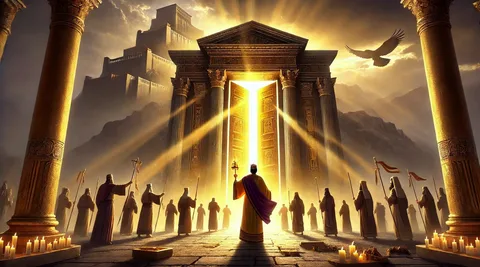
Consequence. Isaiah’s face hardened. “Behold, the days are coming when all that is in your house… shall be carried to Babylon; nothing shall be left.” The king who should have showcased God’s faithfulness showcased his treasures instead, and he sowed seeds of future loss.
Takeaway. Pride can wear a polite smile. It often appears as “just sharing,” yet the center of the story subtly shifts from God to us. Among stories in the Bible about pride, Hezekiah’s is a sober warning about the pride of display.
Herod Agrippa Applause That Became a Trap (Acts 12:20–23)
Setting. Herod Agrippa I donned royal robes woven with silver threads that flashed in the morning sun. He addressed a crowd from the throne; his political fortunes needed a boost.
Story. The people shouted, “The voice of a god, and not of a man!” Herod soaked in the praise. He did not give God the glory.
Consequence. “Immediately an angel of the Lord struck him down… and he was eaten by worms.” The historian Josephus even describes the sudden agony and five-day decline. Pride rode in on public approval and left in public humiliation.
Takeaway. Applause is sweet and dangerous. Pride treats human praise like oxygen. Humility treats it like perfume: nice to smell, deadly to swallow.
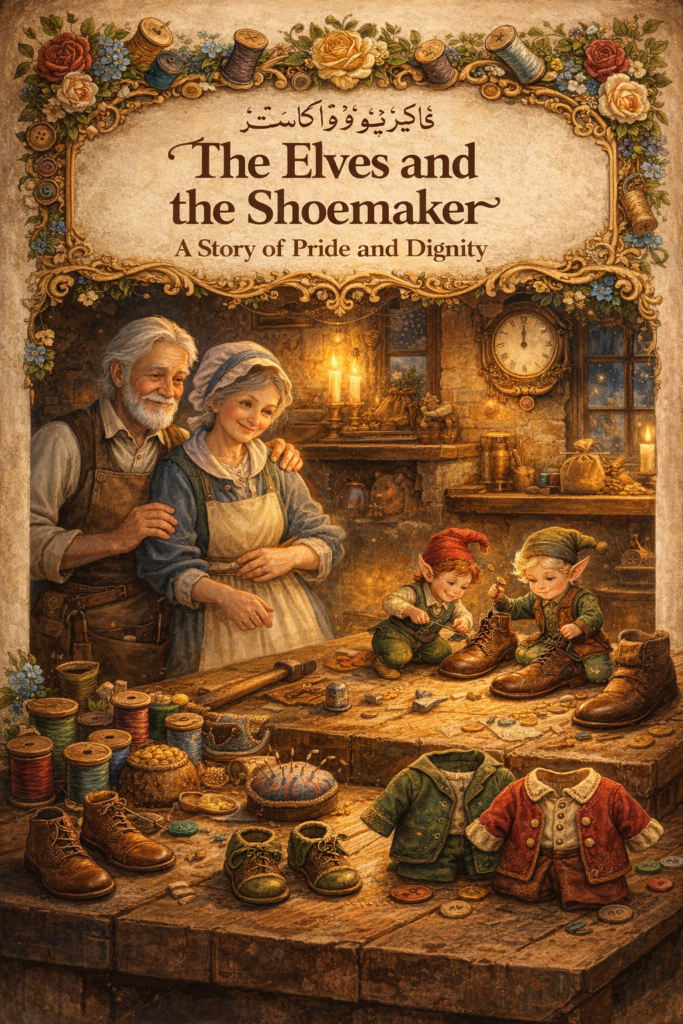
The Elves and the Shoemaker – A Story of Pride and Dignity
Once upon a time, in a quiet little town, there lived a poor shoemaker named Thomas. He was known for his honesty and kindness, but sadly, his business had almost failed. Day after day, he worked hard, yet he could barely earn enough to survive.
One cold evening, Thomas sat in his small workshop, staring at his last piece of leather. His hands trembled slightly not from age, but from worry.
“This is my last chance,” he whispered to his wife. “If I fail tomorrow, we will have nothing left.”
His wife gently placed her hand over his. “You have always worked with honesty. That is something to be proud of, no matter what happens.”
That night, Thomas carefully cut the leather for one pair of shoes and left it on his workbench. Too tired to continue, he blew out the candle and went to sleep.
A Mysterious Help
The next morning, Thomas entered his workshop and froze in surprise.
There, on the table, was a beautifully finished pair of shoes. The stitching was perfect, the leather smooth, and the design far better than anything Thomas had ever made.
“Who could have done this?” he wondered.
Soon, a customer came in, admired the shoes, and paid a generous price. For the first time in many days, Thomas felt a small spark of hope.
That evening, he prepared another pair of leather pieces and left them on the table.
Again, the next morning, the shoes were perfectly made.
Growing Success, Growing Pride
Day after day, the same miracle happened. The mysterious helper continued making beautiful shoes, and Thomas’s shop slowly became popular again.
But something interesting happened inside Thomas.
At first, he felt confused and curious. Then he felt grateful. But as days passed, he began to feel something deeper a sense of pride returning to his heart.
Not pride in the sense of arrogance, but pride in his work, his craft, and his journey.
“I may not be making these shoes myself,” he said to his wife one evening, “but I built this shop with my own hands. I never gave up. That is something I can be proud of.”
His wife smiled. “True pride comes from honesty, not just success.”
The Secret Revealed
One night, Thomas and his wife decided to stay awake and discover the truth.
As midnight approached, two tiny elves appeared. They were small, cheerful, and worked incredibly fast. With skillful hands, they stitched the leather and shaped the shoes perfectly.
Thomas watched in amazement.
“These little creatures saved us,” he whispered.
But his wife looked closely and said softly, “Look at them… they have no proper clothes. They must be cold.”
Pride in Giving Back
The next day, instead of leaving leather on the table, Thomas and his wife prepared something special—tiny clothes, warm jackets, and little shoes for the elves.
That night, the elves arrived again.
But instead of leather, they found the clothes.
Their eyes lit up with joy.
They quickly wore the clothes, laughed happily, and danced around the workshop.
Before leaving, one elf said, “Now we are warm and happy. Our work here is done.”
And just like that, they disappeared forever.
A New Beginning
The next morning, no shoes were made.
For a moment, Thomas felt afraid.
But then he took a deep breath, picked up his tools, and began working.
This time, the shoes were not perfect like before but they were his.
And something had changed.
He worked with confidence, with care, and most importantly with pride in his own ability.
Over time, his skills improved, and his shop continued to grow.
Moral of the Story
True pride is not about perfection or success given by others.
It is about:
- believing in yourself
- valuing your hard work
- and standing strong with dignity, even in difficult times
Thomas learned that help can guide us but real pride comes from our own effort and honesty.
Why These Are “Bible Stories on Pride”
Across these stories of pride in the Bible Babel, Pharaoh, Uzziah, Nebuchadnezzar, Haman, Hezekiah, and Herod the pattern repeats:
- Elevation (gifts, power, success, applause)
- Self-exaltation (“my name, my power, my glory”)
- Warning (prophets, plagues, dreams, conscience)
- Refusal (hardening, anger, showiness)
- Humbling (confusion, loss, exposure)
- Mercy or Judgment (some repent and are restored; others refuse and fall)
Core lesson: Healthy pride = dignity rooted in God; sinful pride = self at the center. If you’re building your “tower,” ask why. If you’re enjoying success, ask who gave it.
Pride and Prejudice Love Story
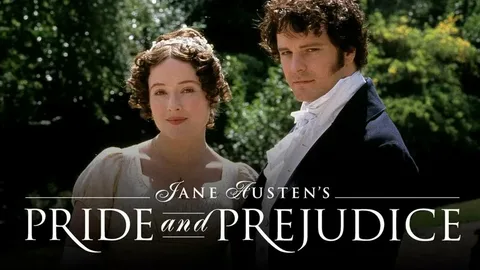
Jane Austen’s story of Pride and Prejudice remains one of the most beloved novels of all time.
- Pride and Prejudice story summary: Elizabeth Bennet, witty and independent, initially clashes with the proud Mr. Darcy. Her prejudice against his arrogance blinds her to his true character. Darcy’s pride keeps him distant. Over time, both learn humility and love.
Readers often wonder: Is Pride and Prejudice based on a true story? The answer is no it is fiction. But the emotions feel so real that it touches millions of hearts.
Another common question is: Is Pride and Prejudice a true story? Again, while not directly true, the love, family struggles, and social issues Austen describes were inspired by real experiences of her time.
For fans of romance: Is The Pride and the Passion a true story? That film was loosely inspired by historical events, but like Austen’s novel, it dramatized them to create a powerful story.
This makes the Pride and Prejudice love story timeless, because it captures real emotions, even if it’s not based on a true tale.
Pride Stories: A Seven Deadly Sins
In the ancient city of Aurelia, there lived a man named Cassian, son of a humble stonemason. Cassian grew up watching his father shape rough blocks into temples, fountains, and bridges. His father always said, “Stone is strong, but it stands only when placed in harmony with others. Alone, it crumbles.”
Cassian listened but in his heart, he dreamed not of shaping stones, but of shaping a name for himself that would echo through the ages.
The Rise of Cassian
Cassian was clever. As a young man, he joined the city guilds, studied architecture, and drew designs so bold that even Aurelia’s council took notice. Soon, he was tasked with building a new tower in the city square.
He worked day and night. His design was ambitious a tower higher than any in the region, capped with a golden dome. When it was finished, the city gathered in awe. People pointed upward, whispering, “Surely the gods themselves will look down on us with favor.”
The council praised him. The merchants offered him wealth. The priests blessed him. But Cassian’s chest swelled. He whispered not thanks to heaven, not gratitude to his workers, but to himself: “This city is nothing without me. I alone gave it glory.”
The Whisper of Pride
One evening, as Cassian stood at the tower’s top, the sunset burned red across the horizon. A shadow fell beside him though no one else stood there. A voice, silky and low, whispered:
“Look at what you’ve built. Look how they bow before you. You are no longer just a man you are destiny itself. Why stop at one tower? Why not build a monument that pierces the clouds? Why not let them worship you?”
Cassian’s heart thrilled. He nodded. Pride had found its throne.
The Fall into Sin
The next years saw Cassian ordering temples in his own name. He taxed the poor to fund statues of his face. Workers begged for rest; he called them lazy. Priests warned him to honor the gods; he mocked their “outdated rituals.” Even his father, the old stonemason, tried to remind him:
“A single stone may gleam, Cassian, but without others, it falls.”
Cassian turned away. “Father, I am no stone. I am the mountain itself.”
His pride turned to cruelty. He dismissed advisers who disagreed. He punished those who failed to cheer loudly enough. The people’s admiration curdled into fear.
The Reckoning
On the day he unveiled his grandest design a colossal bridge across the River Solis storms gathered. The river swelled, thunder cracked, yet Cassian demanded the ceremony continue. He walked across the bridge himself, cloaked in purple, shouting, “See! Even the river obeys me!”
But the river did not obey. With a roar, the swollen waters struck the central pillars. The bridge trembled. Stones cracked, mortar screamed. The workers cried out, “My lord, come back!” But Cassian lifted his arms high:
“No force can undo what I have built with my hands!”
The bridge collapsed. Stones, gold, and Cassian himself plunged into the raging waters. His body was never found—only fragments of his tower later washed ashore.
The Legacy of Pride
The people of Aurelia mourned the workers lost in the collapse, but for Cassian, they built no statue, sang no songs. His name became a proverb whispered by mothers to children: “Beware the fate of Cassian. Pride builds towers on sand.”
The guilds recorded his tale not as a triumph of architecture, but as a warning: Pride is the eldest of the seven deadly sins, the root from which greed, envy, wrath, and downfall spring.
Moral of the Story
Pride begins as confidence, grows into arrogance, and ends as ruin. True greatness is not measured by how high a man builds for himself, but by how humbly he builds for others.
The Dual Faces of Pride
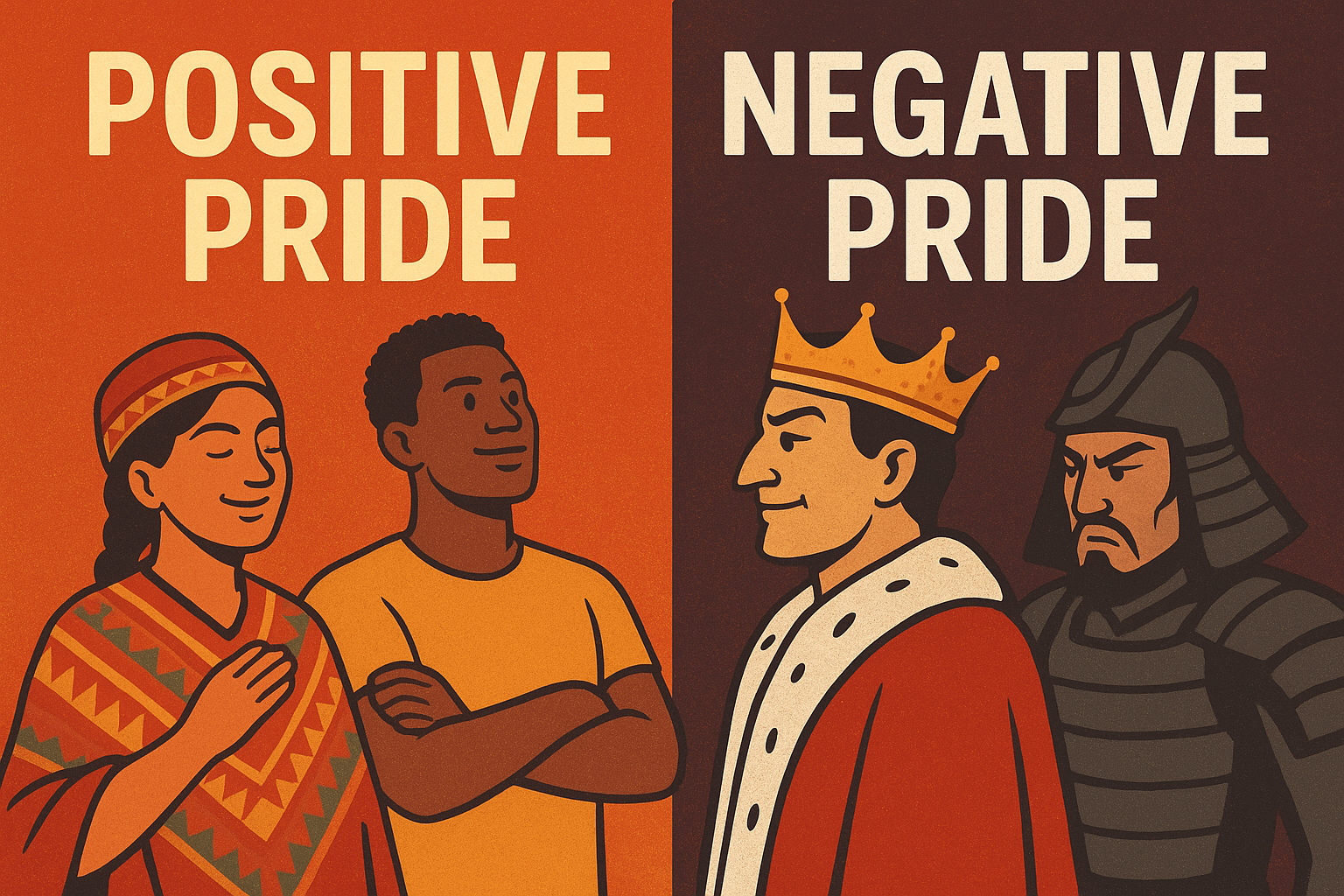
There are two kinds of pride. One kind makes people feel good. The other kind is bad. It hurts people. Makes them do bad things.
- Positive Pride courage, self-respect, cultural identity, love.
- Negative Pride arrogance, ego, downfall.
The question, then, is not whether pride is good or bad, but how we carry it.
Positive Pride
The Weaver of the Red Thread (Cultural Identity)
In a mountain village in Peru, there lived an old woman named Amaya, a weaver whose hands moved like flowing rivers across her loom. Every cloth she made told a story: of llamas running through valleys, of sun gods watching over harvests, of mothers braiding their daughters’ hair.
One day, traders from the city arrived and mocked her craft. “Why waste time weaving these old patterns?” they sneered. “The world wants cheap cloth, fast cloth. Forget these symbols; they are of no value.”
Amaya bowed her head, but inside, she remembered her grandmother’s voice: “Each thread is a memory. If you cut the thread, the memory dies.”
Instead of giving up, she gathered the children of the village. She taught them the meanings of the red thread for blood, the yellow thread for sun, the green for life. She showed them how every pattern carried the breath of their ancestors.
Years later, when tourists came, it was not the cheap cloth they sought, but Amaya’s students’ weavings. They wanted the stories. Amaya became a symbol of pride in heritage, proving that identity preserved with love can never be mocked away.
Moral: True pride lies in honoring where you come from, for culture is the soul’s inheritance.
The Boy Who Stood Alone (Courage)
In a bustling school in Nairobi, there was a boy named Kamau. He was small, shy, and often teased for his stammer. One afternoon, a group of older boys bullied a younger child, pulling away his lunch and laughing.
Everyone looked away except Kamau. His knees trembled, but something inside him whispered: “If not you, then who?” He walked forward, stood before the bullies, and with his shaky voice said, “Stop. Leave him.”
The bullies laughed, but Kamau didn’t move. He clenched his fists, his voice cracking louder, “You will not touch him again.” Something about his courage unsettled them. The bullies left.
The boy he defended hugged him tight. The next day, others joined Kamau when bullies appeared. His stammer remained, but so did his pride he was no longer afraid of being small.
Moral: Pride in courage is not the absence of fear, but the strength to stand tall when standing alone.
The Garden of Self-Respect (Self-Respect)
A woman named Lila lived in a small town where people constantly compared themselves who had the finest dresses, the biggest homes, the most decorated carriages. Lila had none of these. She had only a small cottage and a garden where she grew roses.
At festivals, others would laugh at her plain clothes. “Why don’t you sell your garden and buy something fashionable?” they asked. But Lila always smiled, saying, “My roses bloom for anyone who stops to see them. That is my wealth.”
One day, a drought struck. The wells dried, and the wealthy houses wilted in despair. Only Lila’s garden thrived, for she had cared for the soil deeply for years. Her roses brought comfort to the suffering. Strangers came to her home for water, shade, and a place to rest.
Suddenly, those who once mocked her whispered, “She had the truest riches all along self-respect, and the patience to nurture what others ignored.”
Moral: Pride in self-respect means valuing what you have, even when the world measures worth by shallow scales.
The Warrior’s Song (Cultural Identity & Courage)
Centuries ago in Japan, a young samurai named Hiroshi was ordered to abandon his family’s old traditions and adopt a new way of fighting. “Your father’s sword style is outdated,” his lord said. “If you cling to it, you will lose.”
But Hiroshi remembered his father’s dying words: “Our style is not just about winning. It is about honor, protection, and love for those we defend.”
When war broke out, Hiroshi entered battle with the old ways calm, precise, protecting his comrades instead of rushing for glory. His movements seemed almost like a dance. The soldiers around him found courage in his steadiness.
The enemy was defeated, and Hiroshi became a legend not because he abandoned his roots, but because he carried them proudly into the future. His style was passed on, blending old with new, a song of tradition sung in every strike of his blade.
Moral: Pride in heritage is not stubbornness, but the courage to honor your roots while facing the future.
The Mother Who Loved Out Loud (Love & Pride)
In a small American town lived Rosa, a mother raising her son Daniel, who had a disability. People often stared when Rosa pushed his wheelchair through the park. Some whispered, “Poor woman. Poor child.”
But Rosa never bowed her head. She laughed with Daniel, sang with him, danced with him under the rain. At school meetings, she spoke proudly of his achievements: “He painted a sunrise today,” or “He solved a puzzle no one else could.”
Her joy was contagious. Soon, neighbors who once pitied Daniel began to admire him. Children asked to play with him, not out of charity, but genuine friendship. Rosa’s love transformed how the community saw her son not as a burden, but as a light.
Years later, Daniel stood before his graduating class, delivering a speech with his mother smiling proudly in the front row. “My mother’s pride,” he said, “taught me to believe in myself when the world told me not to.”
Moral: Pride in love gives dignity to others, teaching them they are worthy of joy, respect, and belonging.
Negative Pride
The King Who Challenged the Sun
Long ago, in a desert kingdom, there lived a ruler named King Zahir. His palace was made of gold, and his throne was studded with jewels. But what shone brighter than all of it was his arrogance.
King Zahir believed that nothing was greater than his power not even nature. One summer, when the sun burned too harshly and his people begged for water, Zahir mocked them. “Why beg the gods?” he roared. “I am greater than the sun itself! If I command it to dim, it must bow.”
He ordered a grand ceremony, where he stood on his palace roof and declared, “Sun, lower your light! I am your master now.” The people trembled, afraid of his blasphemy.
The next day, clouds gathered, not to obey him, but to unleash a storm. Lightning struck the palace, and half of it crumbled. His wealth burned, his throne melted, and the king barely escaped alive. His pride had angered the heavens, and from that day, Zahir lived in a small hut, forgotten and powerless.
Moral: Arrogance blinds even the mighty, but nature humbles all.
The Scholar Who Refused to Listen
In a grand city of learning, there was a scholar named Harun, known for his vast knowledge. He could recite scriptures, solve puzzles, and debate anyone. But his ego grew so large that he refused to learn from anyone else.
One day, a young boy asked him a riddle: “What weighs nothing, yet can crush mountains?” Harun laughed. “Foolish child! Nothing can crush mountains.”
The boy replied softly, “Pride. For it destroys the strongest hearts.”
Angered, Harun dismissed the boy, but the words haunted him. Years later, when his arrogance pushed away all his students and peers, he sat alone in silence. His books gathered dust, and no one sought his wisdom anymore. He realized too late that his pride had crushed his own greatness.
Moral: Knowledge without humility becomes ignorance.
The Warrior’s Downfall
Ronan was the strongest warrior in his land. He had never lost a duel, and his victories on the battlefield were sung across kingdoms. But with victory came arrogance.
When an old general advised him, “Even the strongest must remain cautious,” Ronan laughed. “No man alive can defeat me.”
In his pride, he accepted a challenge from a weaker, unknown fighter. He underestimated the man, mocking him openly. But during the duel, the challenger fought with patience and humility, waiting for Ronan’s arrogance to expose weakness.
Ronan grew reckless, and in a single strike, the challenger disarmed him. Humiliated, Ronan was forced to bow before the very crowd that once adored him. His pride had written his defeat.
Moral: Ego blinds strength, but humility sharpens it.
The Farmer Who Forgot His Roots
Javed was once a poor farmer, but after years of hard work, his fields bloomed, and he became the wealthiest man in the village. At first, he was kind, but soon pride consumed him.
He refused to share water from his wells, even in drought. “I earned this wealth. Why should I help beggars?” he sneered.
One night, a great flood came. His barns drowned, his cattle swept away, and his golden fields destroyed. Homeless and starving, he went to the same villagers he once mocked. To his surprise, they shared their little food with him.
With tears, Javed realized that wealth can vanish, but humility and kindness live forever.
Moral: Pride in wealth invites ruin; gratitude and kindness ensure respect.
The Emperor and the Empty Throne
Emperor Liang ruled with absolute power. His ego was so inflated that he declared himself a god. He built a throne taller than his palace so people would look up to him as they prayed.
One morning, he demanded a massive feast. While he ate, his people starved. “Why should I care for their hunger?” he said. “They exist to serve me.”
That night, rebels stormed the palace. The emperor fled to his golden throne, believing it untouchable. But when he climbed, the throne built too high in arrogance collapsed under its own weight. Liang was buried under the rubble of his pride.
The people built no statue for him, no memory of greatness only a warning: “Do not build thrones out of arrogance, for they cannot stand.”
Moral: The higher pride lifts you, the harder the fall.
For More Stories
Conclusion
Pride is a feeling that people have. It has ruined kingdoms in Bible stories about pride. It has also inspired love stories like Pride and Prejudice. Many leaders, such, as Harvey Milk have used pride to bring about change.
When pride is good it makes people feel proud of who they’re. It gives them the courage to stand up for themselves. It also makes them feel free.
“The right kind of pride makes people feel good. The wrong kind of pride causes problems.”